Intelligent returns & claims processes built to retain revenue
Create an AI-driven, automated Returns and Claims Portal that personalizes every experience, turning refunds into exchanges and claims into opportunities to build trust. Simplify resolution, boost satisfaction, and transform post-purchase operations from a cost center into a profit driver.
Try out our interactive experience
Learn more about Returns & Claims

AI agents turn returns into revenue and enhance claims insights

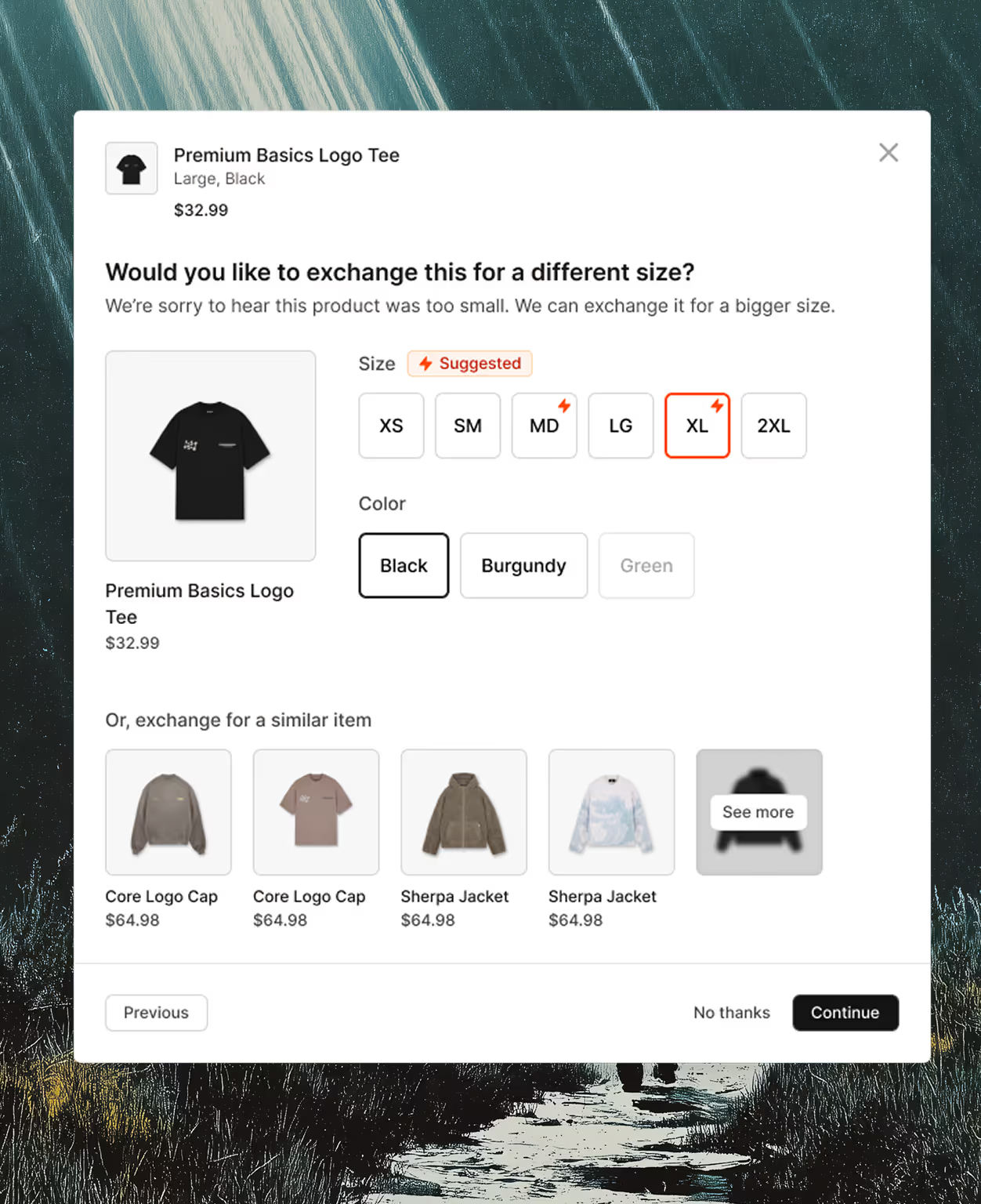
1:1 exchange recommendations

Let an AI exchange agent analyze the customer, return reasons, and product offerings to deliver the right exchange at the right moment. As a customer goes through the return flow, the AI will immediately analyze the reasons and recommend a new product, increasing exchange rate and retaining more revenue.

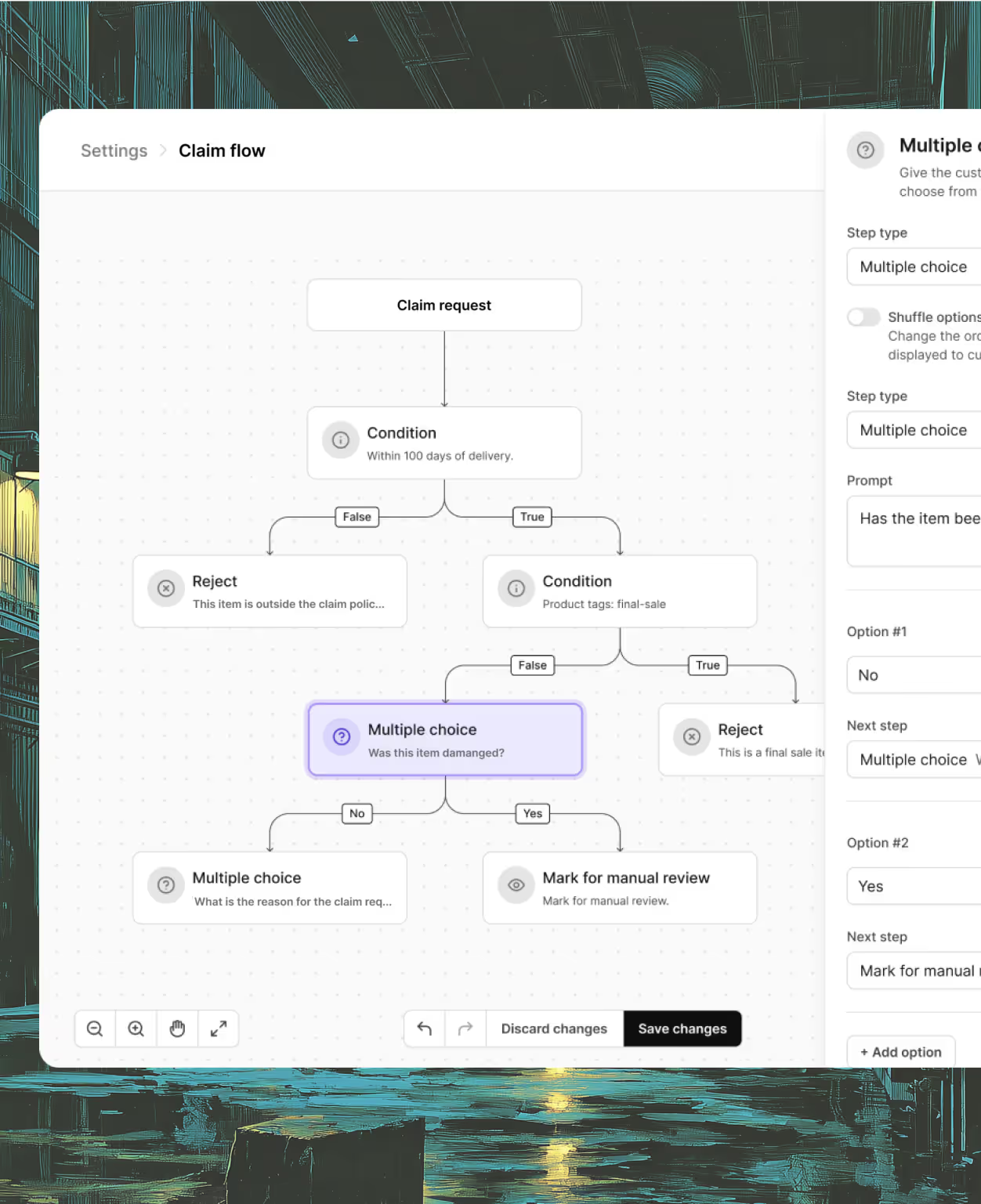
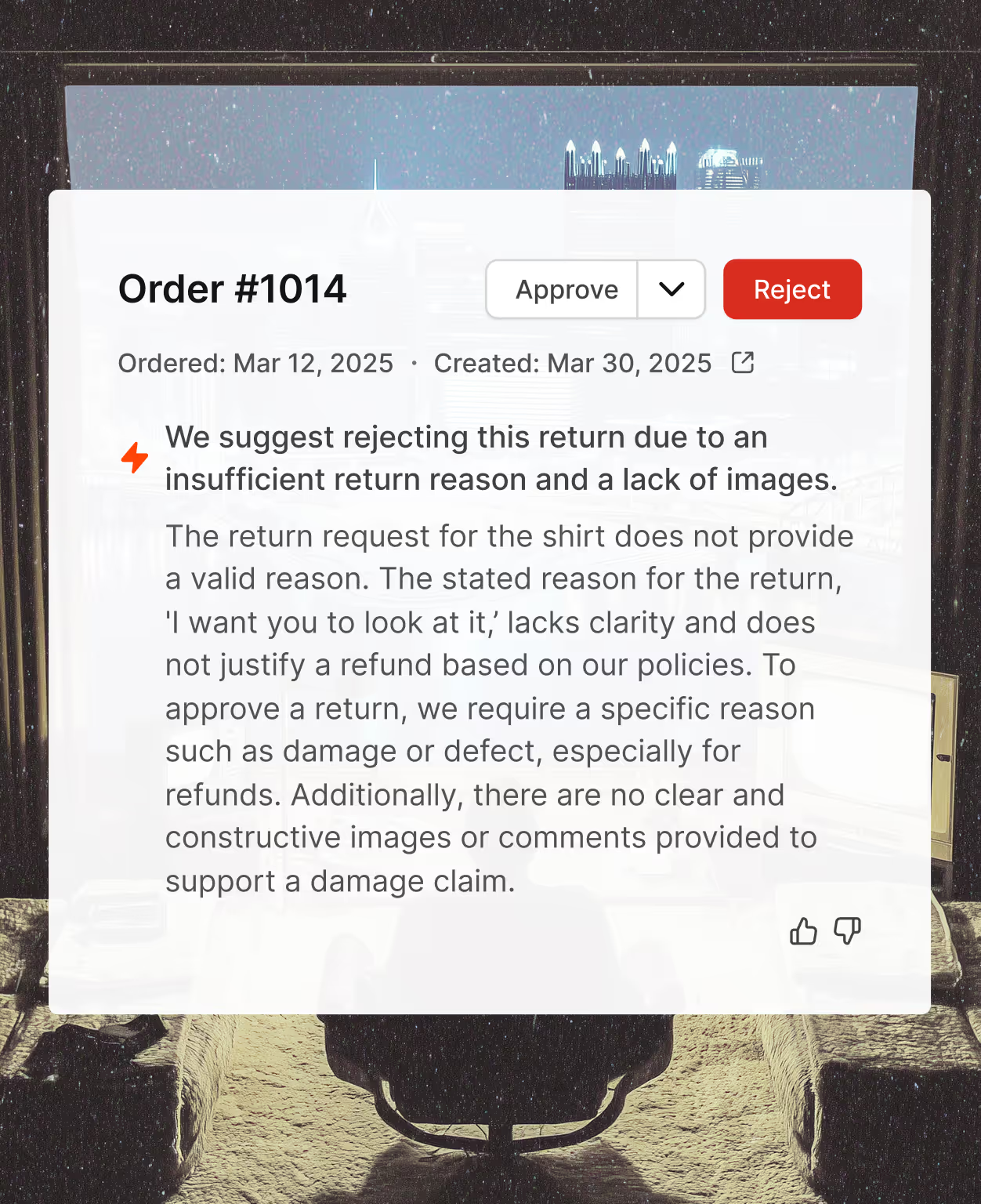
Automate return and claim reviews

AI reviews images, customer history, and policy rules to recommend, approve, or deny returns and claims. Reduce manual effort, increase accuracy, and ensure every decision aligns with your policies.

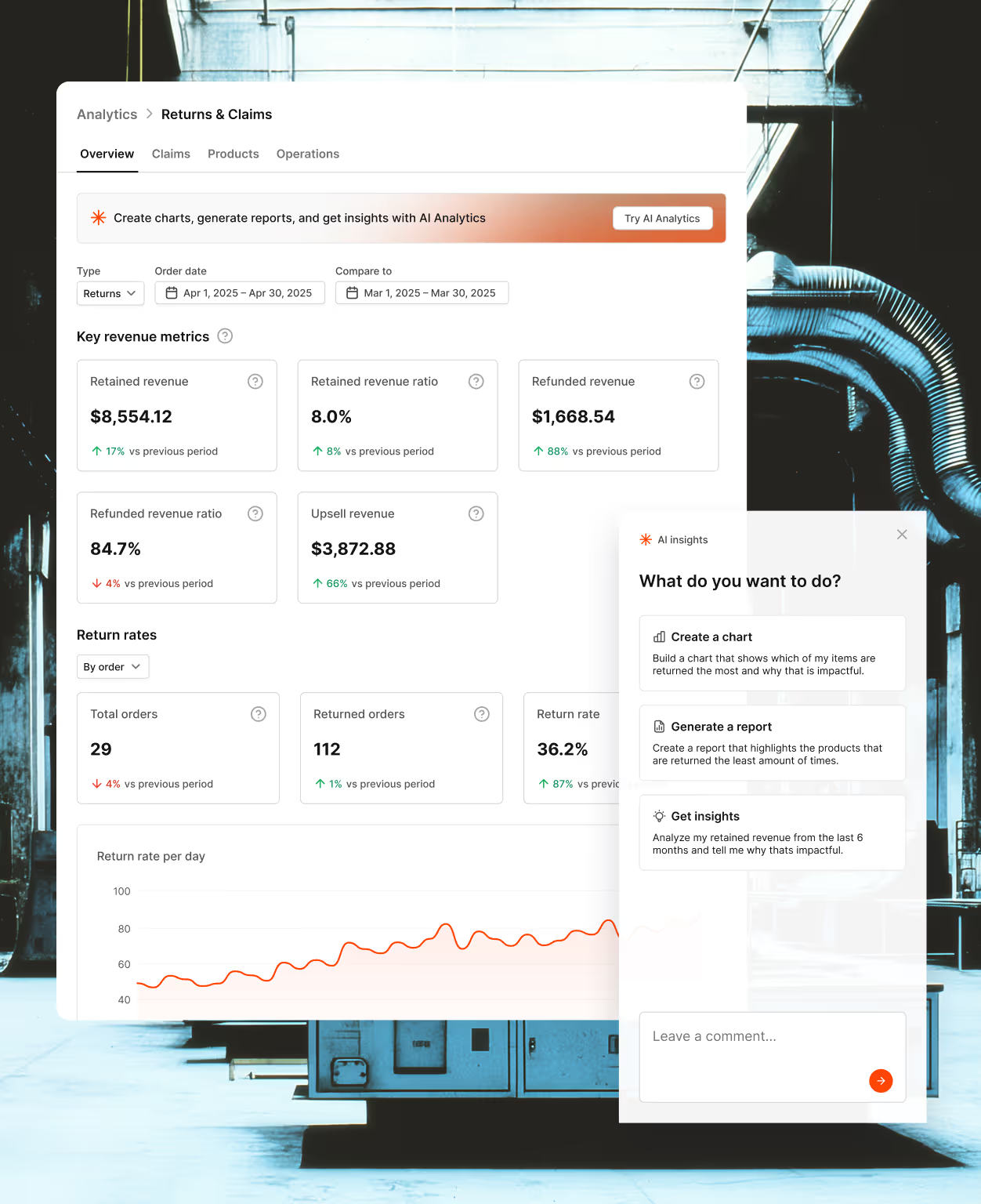
Deeper returns and claims insights

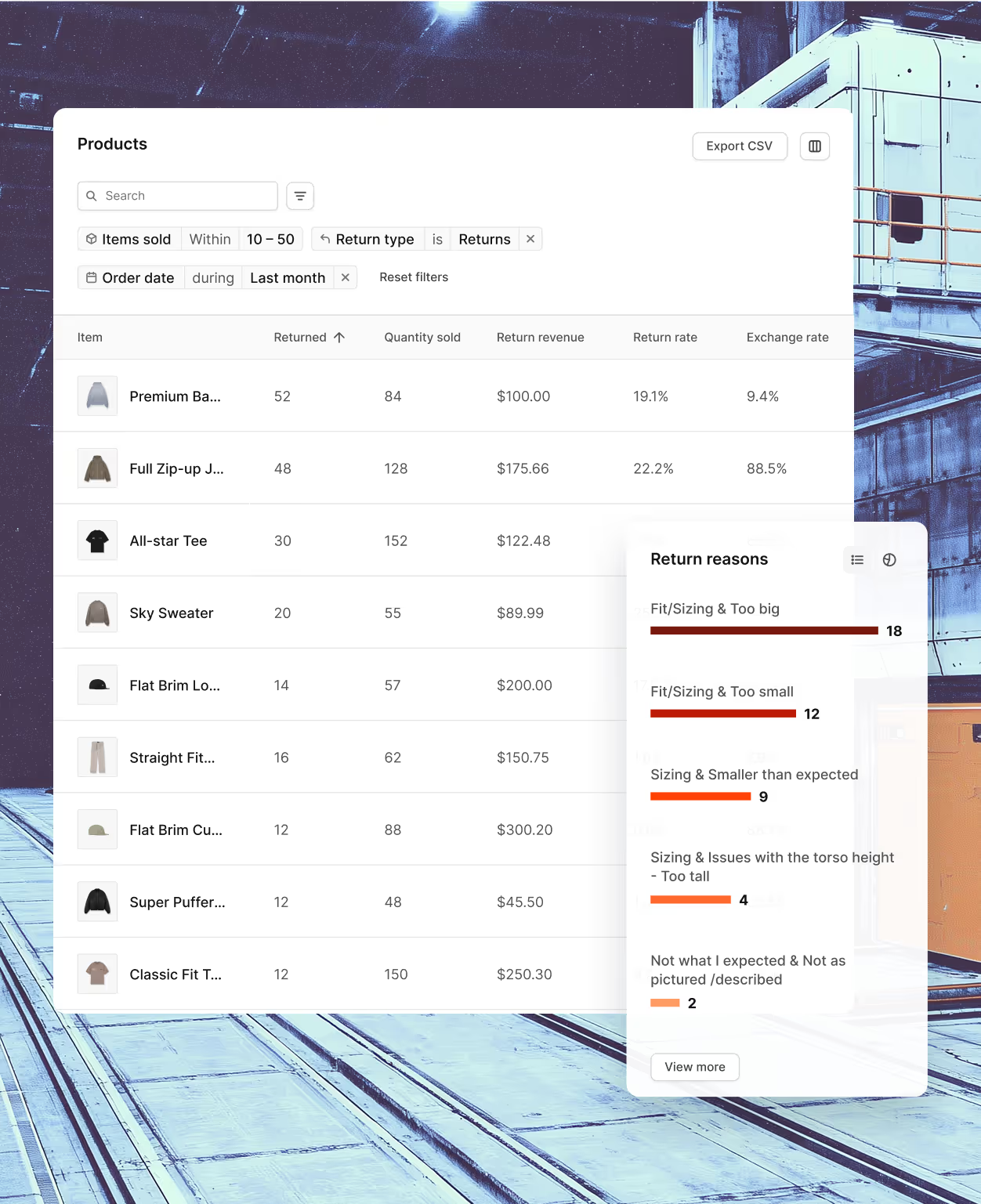
Talk to your post-purchase data like you would an in-house analyst. Easily surface product and claim trends to reduce return rates, detect issues early, and better understand your customers. Returns becomes a gold mine of customer information that the whole team can learn from to reduce return rate and better understand customer needs.
What sets Redo returns apart

Industry-best return portal

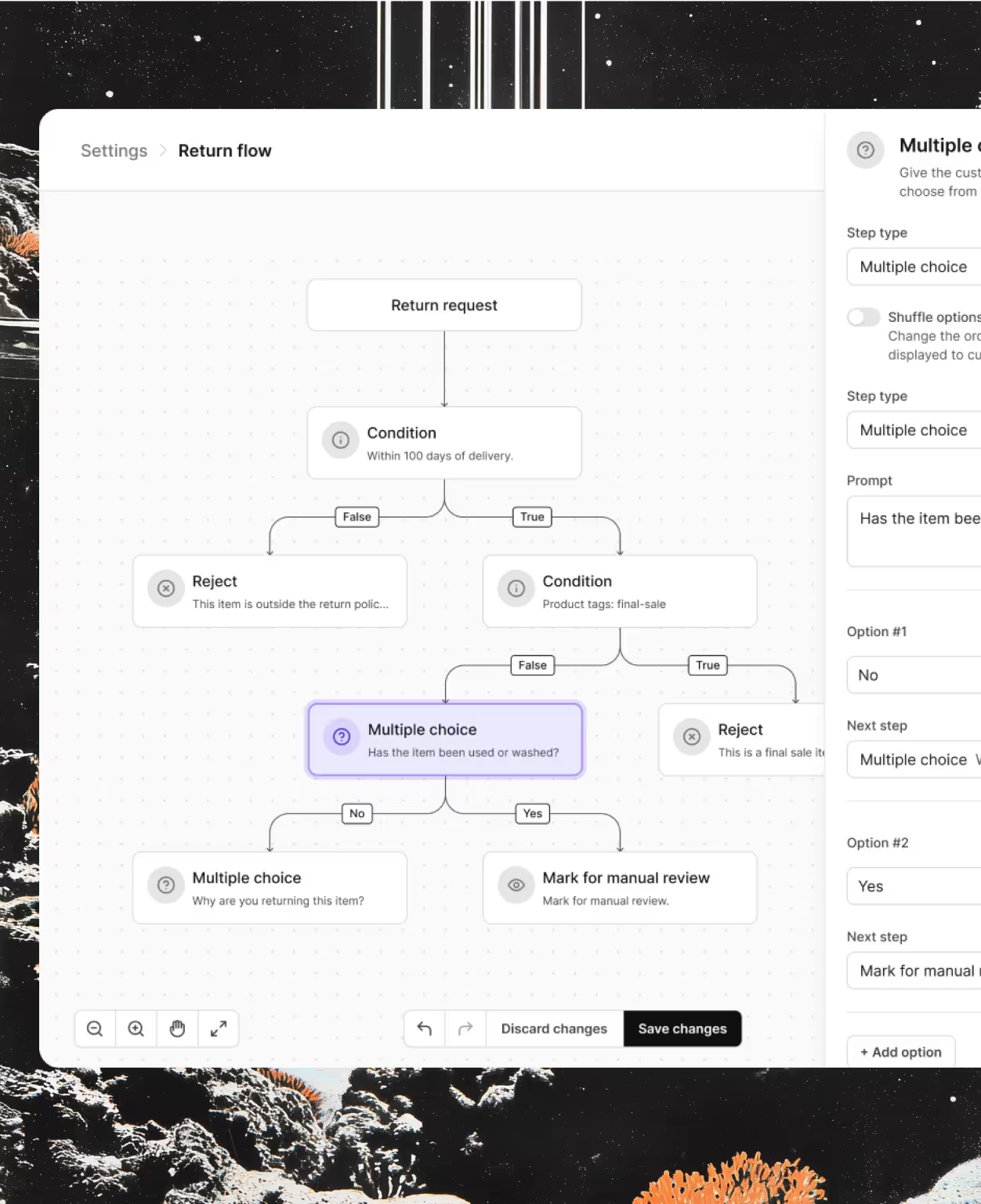
We’ll help you build and optimize the ideal flow for your business, continually A/B testing to improve exchange rates, retain revenue, and eliminate fraud. Add in any nuance or customization you need to gather information, segment and process returns without an additional burden on your support team.

Product-level insights

Analyze returns and claims in the same dashboard down to the product and variant level. Find return reason trends and solve common return issues faster than ever and update products to reduce returns with direct customer feedback.

Cost savings

The combination of our free software, Redo covering the cost of your return labels, and your increase in exchange rate means lower costs, higher conversion rates, and greater profitability. The financial impact of returns begins to turn from a cost center to a revenue driver.
Personalized options for claim management

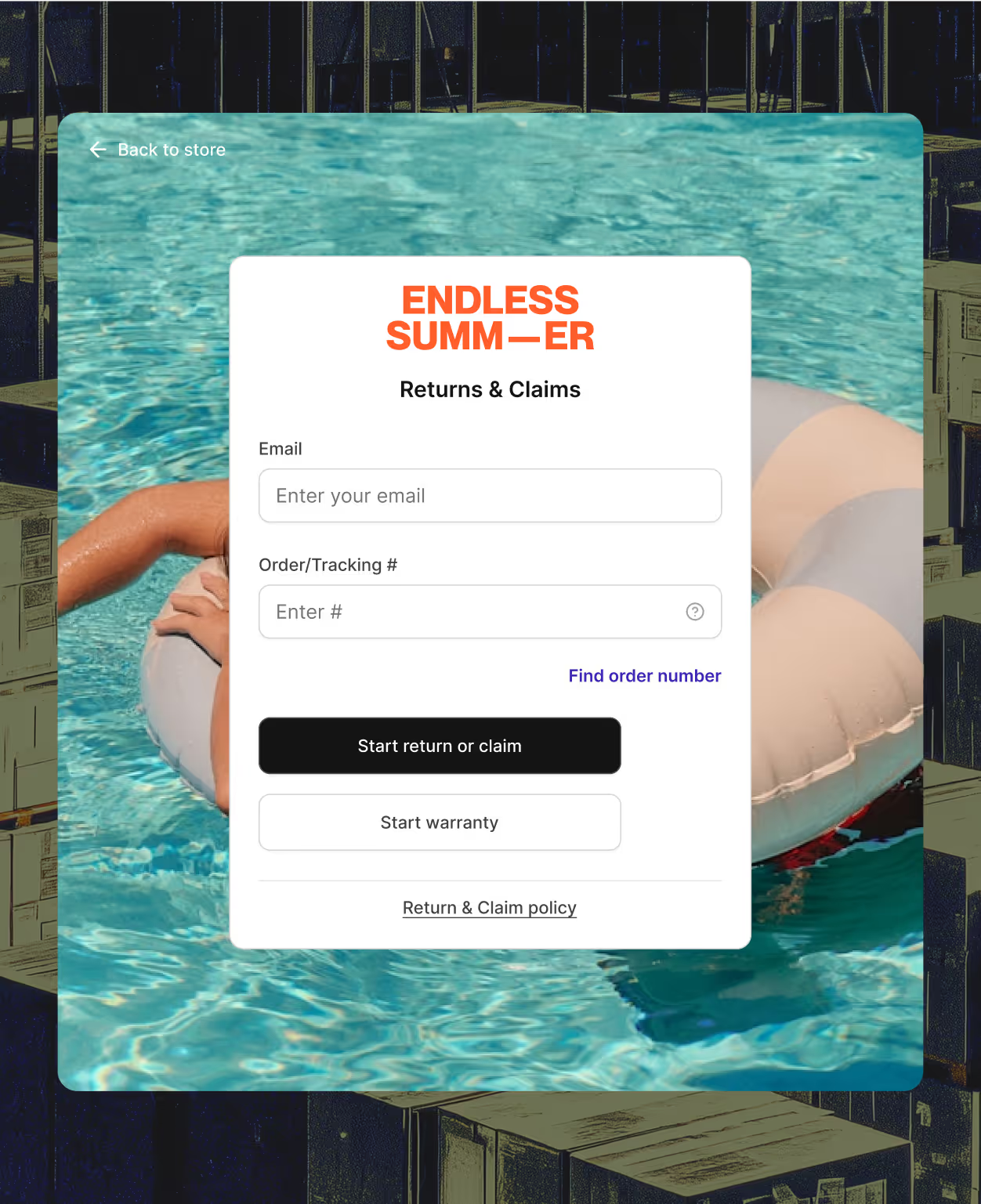
Fully branded claim portal

Create a custom, branded flow to automate your claims process and allow customers to self-serve. Reduce support requests and allow a smoother customer experience through a customizable claims portal.

Maximize your profit

Decide if you want Redo to handle claims and share the revenue or handle the claims yourself and keep all the revenue.

Tailor to your needs

With everything in one place, you can enhance customer satisfaction and build loyalty by providing a seamless post-purchase experience.
Have questions?

How does Redo handle returns for product bundles?
Redo supports returning an entire product bundle in a single step through its Bundle Return Functionality, so customers no longer have to initiate a separate return for each item inside the bundle. A toggle in the return portal lets the customer choose whether to return the full bundle or only specific items within it. Before bundle-aware returns, merchants selling curated sets, multi-packs, or starter kits often saw customers abandon the return flow or open support tickets because the experience forced them to click through every individual item. The extra friction was especially painful for brands like True Classic whose catalogs are built around multi-pack apparel sets. With the new flow, the return request is submitted as one unified bundle unit, which means merchant operations teams see a single entry in their return management dashboard instead of several disconnected line items. This keeps refunds, exchanges, and restocking clean to track and makes return reporting easier to interpret across bundle-heavy catalogs. Bundle returns work alongside the rest of Redo's return features, including instant exchanges, bonus store credit incentives, and proportional duty and tax refunds on international orders. For merchants whose catalogs lean on bundles, this means a faster self-service return experience for customers and a measurable drop in bundle-related support tickets.
How does Redo handle refunds and store credit on multi-currency Shopify stores?
Redo automatically detects the currency used on each order and processes refunds and store credit in the correct denomination, so customers always receive compensation matching what they originally paid. This includes gift card store credit, which is issued in the transaction currency rather than the store's base currency. When a merchant operates multiple Shopify storefronts or uses Shopify Markets to sell in different currencies, Redo's return flow calculates refund amounts using the original order's currency and exchange rate. The return activity log displays the correct currency label for every transaction, giving merchant support teams clear visibility into exactly what was refunded and in which denomination. This accuracy was a targeted fix after merchants on multi-currency storefronts reported seeing incorrect currency labels in their activity logs after gift cards were issued. For merchants using ERP integrations like Celigo or NetSuite, store credit issued as a Shopify gift card now passes through to order line items with accurate currency data. Financial reconciliation between Redo and accounting systems stays clean without manual currency conversion or adjustment, even across storefronts operating in USD, CAD, EUR, or other currencies. Multi-currency accuracy extends across all compensation types Redo supports, including direct refunds, gift card store credit, and bonus store credit incentives. Merchants running international storefronts can process returns confidently knowing every transaction reflects the correct amount in the correct currency, reducing support tickets and eliminating reconciliation errors across their finance operations.
Does Redo automatically refund duties and taxes when international customers return their orders?
Redo supports refunding duties and taxes paid at checkout as part of the return, not just the base product price. Merchants can enable this through a setting in their Redo admin, and the refund amount is calculated proportionally based on which specific items the customer is returning. Before this capability, international merchants could only refund the product price, leaving customers short by the duties and tax amounts they originally paid at checkout. This created refund disputes, reduced customer satisfaction, and compliance concerns for brands selling into markets where full duty refunds are expected or legally required. Redo's Refund Duties and Taxes setting works alongside the platform's geographic routing logic, which directs returns from each country to the correct regional processing hub. Returns from France, for example, route to Redo's Netherlands facility rather than a North American warehouse, keeping transit times and cross-border shipping costs low. Country-level return window rules give merchants additional control over which policies apply in each region. Together, accurate duties refunds and intelligent geographic routing give cross-border merchants a complete international returns workflow, reducing misrouted shipments, eliminating partial refund complaints, and supporting compliance for brands scaling into markets where duty refunds are an expected part of the customer experience.
How does Redo route returns to the correct warehouse when a merchant has multiple fulfillment locations?
Redo uses configurable geographic routing rules to automatically direct each return to the correct warehouse based on the customer's location and the merchant's fulfillment network. Instead of forcing customers or support teams to manually select a return destination, Redo evaluates the origin of the return and matches it to the nearest or most appropriate facility using country-level and regional logic. For merchants operating across multiple regions, Redo supports distinct routing paths for domestic and international returns. A return initiated in France, for example, routes to a European hub rather than a North American facility, while US-based returns flow to the merchant's domestic warehouse or 3PL partner. This geographic routing extends to merchants using Redo Managed Returns (RMR), where Redo's own warehouse network handles receiving, verification, and grading on the merchant's behalf. Merchants with complex setups, such as multiple Shopify storefronts across the US, Canada, and the EU, can manage routing rules from a single Redo admin without duplicating configurations for each storefront. Redo also integrates with third-party logistics providers so that return labels automatically reflect the correct destination address based on the routing rules in place. The result is fewer misrouted shipments, lower cross-border shipping costs, and faster return processing times because every package reaches the right facility on the first attempt.
How does Redo sync return and exchange data with ERP systems like NetSuite?
Redo connects directly with ERP systems like NetSuite to ensure every return, exchange, and store credit transaction flows accurately into your financial records without manual reconciliation. Unlike other returns platforms that create accounting discrepancies through inconsistent exchange transaction handling, Redo structures each data handoff so your ERP receives clean, line-item-level detail. For merchants using Celigo as middleware, Redo passes store credit issued as gift cards directly into NetSuite line items, closing a common reconciliation gap that forces finance teams to manually match transactions. Exchange payouts are structured to avoid the duplicate or orphaned records that often result from draft-order-based exchange flows on other platforms. Redo also supports automated RMA creation in NetSuite when a return is initiated, removing the need for manual data entry between your returns portal and your ERP. Duty and tax refund amounts on international returns are calculated proportionally and included in the data sync, so cross-border return accounting stays accurate without spreadsheet workarounds. The result is a returns operation where finance teams spend less time reconciling and more time on strategic work, with every refund, exchange, and store credit accounted for at the line-item level in your ERP.
Can Redo issue returnless refunds so customers keep low-value items instead of shipping them back?
Yes, Redo supports returnless refunds, also called keep-the-item resolutions, letting merchants refund or credit a customer without requiring the physical product to ship back. Inside the Redo returns portal, merchants create rules that automatically trigger a returnless refund when the item value, category, or return reason falls below a threshold where reverse shipping and restocking costs exceed the product value. Rules can be scoped by SKU, collection, price, weight, country, or return reason, so a damaged $12 t-shirt from an international customer can be auto-approved for a keep-it refund while higher-value items still route through the normal return path. Redo's AI Review Agent also scans return reasons and photo evidence to flag requests that qualify for returnless treatment, so the decision is grounded in real return context rather than a blanket policy. Merchants keep full visibility through the returns analytics dashboard, which tracks how often returnless refunds fire, total savings on reverse logistics, and any abuse patterns by customer. For brands shipping lightweight, low-margin, or bulky items, returnless refunds typically cut reverse logistics spend on qualifying orders by 60 to 90 percent while improving customer satisfaction scores, since shoppers avoid the hassle of packing and dropping off a return.
Does Redo handle returns for orders placed through TikTok Shop?
Yes, Redo natively supports returns for orders placed through TikTok Shop, pulling those orders directly into Redo's standard returns management workflow without any manual handling required. Merchants connect their TikTok Shop account to Redo once, and all TikTok orders become eligible for the same return rules, automations, and portal experience they already apply to Shopify orders. When a customer initiates a return on a TikTok Shop order, the request flows into Redo's returns portal and is processed with the same rules-based automation as any other channel. Merchants can apply their existing return policies, return windows, and exchange incentives to TikTok orders without creating a separate workflow. Return reasons, photos, and resolution choices are captured through the same branded portal, keeping the customer experience consistent regardless of where the original purchase was made. The TikTok integration also consolidates reporting, so all TikTok return activity shows up inside Redo's analytics dashboard alongside Shopify and other channel data. Merchants get a single view of return rates, exchange conversion, and refund costs across every sales channel, eliminating the manual reconciliation that comes with managing returns across separate platforms. For brands scaling on TikTok Shop, this means full returns coverage from day one without adding operational overhead.
Can Redo offer bonus store credit to encourage exchanges instead of refunds?
Yes, Redo lets merchants automatically offer bonus store credit when customers choose store credit or an exchange instead of a cash refund, turning return requests into retained revenue. Merchants configure a bonus percentage or flat amount inside the returns portal, and the incentive appears to the shopper at the moment they pick their refund method, nudging them toward keeping the money with your brand. The bonus is fully customizable by return reason, product category, or customer segment, so you can push harder on exchanges for sizing issues while keeping standard terms for defective items. Redo tracks every bonus issued and reports the lift in store credit selection and exchange rate inside the analytics dashboard, so you can see exactly how much refund cash you kept on your balance sheet. Because the store credit is issued through Redo's native Shopify integration, it works seamlessly with your existing checkout and gift card systems, with no manual reconciliation. Merchants using bonus credit typically convert a meaningful share of would-be refunds into future orders, protecting revenue and improving customer lifetime value.
Does Redo offer instant exchanges, and how are merchants protected if a customer never returns the original item?
Redo offers Instant Exchanges, allowing merchants to ship replacement items to customers immediately after an exchange request is approved, before the original item has been received or inspected. This removes the waiting period that often pushes customers toward a cash refund and keeps more revenue inside the store as an exchange rather than a return. To protect merchants from customers who accept the new item without ever shipping back the original, Redo places an authorization hold on the customer's payment method through Stripe at the time the instant exchange is created. Merchants can configure the hold amount to $0, $1, or the full cost of the replacement item depending on their risk tolerance. If the customer ships back the original within the configured return window, the hold is automatically released. If no return is received, the hold converts into a recovery charge, and Redo collects the funds from the shopper through Stripe and remits them to the merchant as a statement credit. Merchants also have manual control for cases that fall outside the automated flow. The Charge button on the return detail page in the Redo portal allows merchants to trigger a recovery charge directly, and charge disputes can be reviewed and managed from the same interface using the full transaction history and payment timeline data. Instant Exchanges can be enabled in Settings under Exchanges and apply across all standard exchange flows, giving merchants a way to offer a premium, low-friction exchange experience without taking on unmanageable financial risk.
How does Redo handle returns from international customers?
Redo supports international returns through partnerships with international carrier networks, giving merchants full control over which customer regions are included in the returns program. Merchants can choose to include or exclude international customers from the free returns opt-in at checkout, ensuring the economics of cross-border return shipping make sense before extending the benefit to every market. For merchants operating multi-currency stores, Redo's Currency-Specific Fee and Bonus Settings allow return shipping fees and exchange bonuses to be configured as fixed amounts in local currencies. A merchant can set a CAD $10 return shipping fee, for example, and Canadian shoppers will always see exactly CAD $10 rather than an amount that fluctuates with live exchange rates. This predictability removes confusion for international shoppers and prevents trust erosion from unpredictable fee displays. Redo also handles cross-region inventory conflicts during exchanges. When a customer in the EU initiates an exchange, Redo's Cross-Region Inventory Blocking ensures that US-only inventory is not surfaced as an available option, eliminating failed exchange attempts and the manual work required to resolve them. Together, these features give multi-country brands consistent, policy-driven international return operations that scale without added overhead.
Does Redo support in-store returns through Shopify POS?
Yes, Redo supports in-store returns through a native POS tile built directly into Shopify POS, allowing store associates to process customer returns at the register without switching to a separate app or system. The Redo POS tile is embedded inside Shopify POS, so associates can look up online orders, apply your configured return policy rules, issue refunds, or initiate an exchange during the same customer interaction. Because the tile uses the same policy engine as Redo's online returns portal, customers receive a consistent experience whether they walk into a store or ship an item back from home. Redo provides on-site or virtual training sessions for store managers, who can then train their associates, making rollout straightforward even for teams without technical resources. All in-store return activity flows into the same Redo merchant dashboard as online returns, giving you unified reporting across every sales channel in one place. You can track return reasons, refund methods, and exchange outcomes for both in-store and digital transactions without reconciling data from separate systems, eliminating the operational inconsistency that typically develops when in-store and ecommerce returns are handled independently.
How does Redo use AI to capture more accurate return reasons from customers?
Redo's AI Return Reasons feature replaces the standard multiple-choice dropdown with an open-text input, letting customers describe the reason for their return in their own words while Redo's AI automatically categorizes each response into the correct return reason bucket for merchant reporting. This approach captures far more specific and actionable data than a fixed list of options, revealing nuanced patterns such as recurring fit complaints tied to a specific supplier, color accuracy issues with product photography, or sizing inconsistencies within a particular category. Redo recently improved the accuracy of its AI Return Reason bucketing engine, fixing cases where customer responses were being miscategorized, so merchants can trust the analytics driving their product and inventory decisions. On the merchant side, return reasons are surfaced in the Returns analytics dashboard grouped by product, category, and return type, making it easy to spot which SKUs generate the most fit complaints or quality issues without manually reviewing individual submissions. The AI analytics chat feature also lets merchants ask plain-language questions about their return data and receive instant trend summaries, so teams can act on insights without building custom reports. For brands managing large SKU catalogs or seasonal assortments, having accurate, AI-powered return reason data helps identify product improvements, optimize exchange recommendations, and reduce long-term return rates by addressing root causes at the source.
How does Redo detect and prevent serial return fraud?
Redo detects serial return fraud using an AI-powered detection system that analyzes each customer's return history and behavior patterns to identify repeat abusers before a return is approved. When a return request comes in, Redo's fraud detection model reviews signals like return frequency, return timing, and item condition history to flag customers who show patterns consistent with serial fraud, such as repeatedly returning used items or claiming damage on high-value products. Merchants can configure fraud detection thresholds by price point and product type, so stricter scrutiny applies to high-value items while the experience stays seamless for everyday returns. Returns that trigger a fraud flag can be automatically held for merchant review or denied outright, depending on the policy settings you configure. Redo also lets you set ongoing policies for flagged accounts, giving you a way to manage repeat offenders without manually monitoring every request. Redo recently improved the accuracy of its Serial Return Fraud Detection system by refining the AI prompts that power it, reducing false positives on legitimate customers while strengthening detection of actual fraud patterns. For luxury and high-value brands where a single fraudulent return can represent a significant financial loss, this level of automated protection helps preserve margin and keeps a generous return policy sustainable over time.
Does Redo provide reporting and analytics on claims and protection usage?
Yes, Redo provides detailed analytics on package protection usage, claim statuses, trends, and costs. These insights allow you to understand shipping risks, optimize your fulfillment processes, and proactively address any recurring issues, ultimately enhancing customer experience and reducing long-term shipping-related expenses.
Can Redo integrate smoothly with my current ecommerce setup?
Absolutely. Redo integrates seamlessly with popular platforms like Shopify, WooCommerce, BigCommerce, and more. Setup is straightforward, and you can quickly offer protection during checkout without major changes to your workflow. This makes the transition easy, fast, and hassle-free.
How does Redo Package Protection benefit my business financially?
Redo helps merchants by eliminating losses associated with package issues. Instead of covering replacement costs yourself, Redo handles claims and reimbursements. Additionally, offering package protection can slightly increase average order value and encourage customers to complete checkout confidently, enhancing your store's overall revenue.
How easy is it for customers to manage claims with Redo?
Redo makes the claim process incredibly simple with a user-friendly self-service portal. Customers can file claims quickly, and most claims are reviewed within 1–2 business days. By streamlining this process, Redo significantly reduces customer frustration, lowers support volume, and saves your team valuable time.
What exactly is Redo Package Protection, and why should my store offer it?
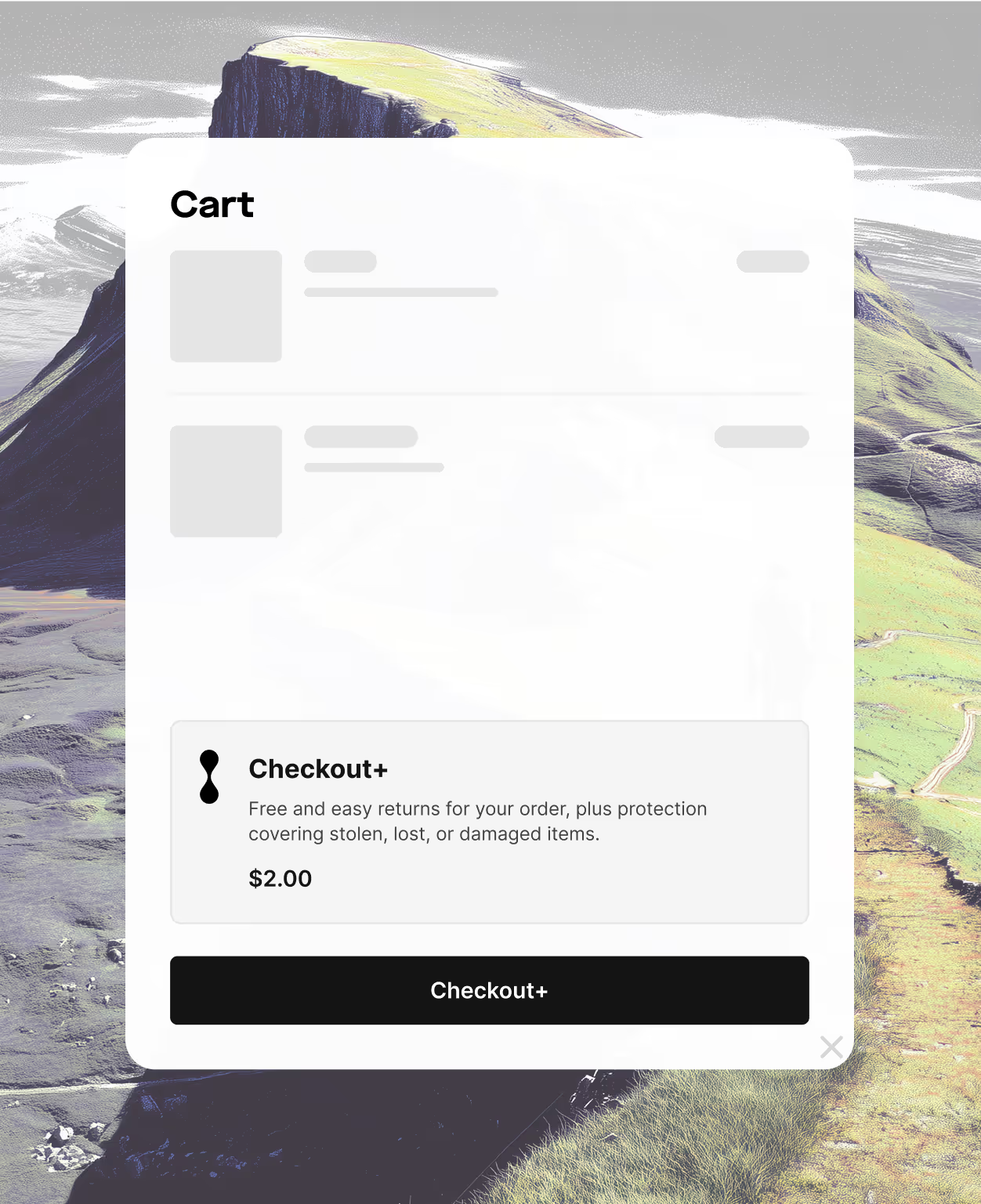
Redo Package Protection allows customers to insure their packages against loss, theft, or damage during shipping directly at checkout. Offering Redo boosts customer trust, reduces costly disputes, minimizes negative reviews, and shifts liability away from your business, helping you maintain profitability and customer satisfaction.
Can Redo integrate directly with my existing ecommerce platform?
Yes, Redo integrates smoothly with leading ecommerce platforms like Shopify, Salesforce CommerceCloud, BigCommerce and can integrate with custom sites, ensuring automatic syncing of order information, inventory updates, and refund processes. This makes setup fast and minimizes operational disruptions.
What kind of insights and analytics can I get from Redo Returns?
Redo provides detailed analytics, including return reasons, product-specific return trends, customer satisfaction ratings, and operational efficiency metrics, enabling you to identify opportunities to reduce returns and enhance profitability.
Does Redo handle exchanges in addition to returns?
Absolutely. Redo supports both returns and seamless product exchanges directly through the portal. Customers can easily select exchanges, helping you retain revenue and reduce refunds. We have an AI that also helps recommend products based on user behavior and preferences to help you increase your exchange rate.
Can I customize the returns portal to match my brand?
Yes, Redo's returns portal is fully customizable with your branding, messaging, return policies, and unique workflows, ensuring a consistent brand experience for your customers throughout the returns journey.
How does Redo simplify the returns process for customers?
Redo offers a user-friendly, branded returns portal where customers can initiate and track returns effortlessly. It streamlines returns with clear, guided steps, improving customer satisfaction and reducing customer service workload.
Get started with Returns & Claims

Thank you!

We've received your request and will be in touch within one business day.

Something went wrong — please try again.

Close